|
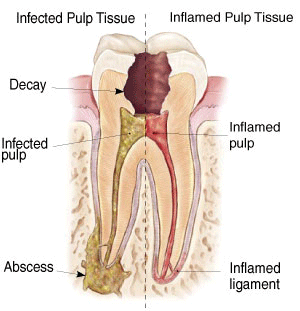
Root canal treatment also known as Endodontic treatment, is the process of removing infected, injured or dead pulp from your Tooth. The space inside the hard layers of each tooth is called the Root canal. This Root Canal is filled with soft dental Pulp made up of nerves and blood vessels that help your tooth grow and develop.
:: YOU REQUIRE A ROOT CANAL TREATMENT (RCT) IF YOU HAVE ::
-
Sensitivity/pain in a tooth on having something cold especially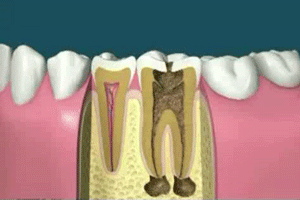 drinking something chilled/cold. drinking something chilled/cold.
-
Pain in the tooth while applying pressure to eat/chew something (the patient avoids eating on the side where the infected tooth is).
-
A pimple near the gum of the infected tooth which comes and goes (may or may not have pus); this tooth may or may not have pain.
A recent survey showed that patients who have experienced RCT are 6 times more likely to describe it as painless than patients who have not had RCT.
Pain during RCT could be mild or moderate or severe (in few cases), depending upon the severity of the infection. However, with the latest available technologies, anesthetics and antibiotics, a root canal is as comfortable as getting a filling done in a tooth.
RCT’s could be multiple or one-sitting treatments depending upon the infection in the tooth.
Single Sitting Root Canal Treatment
In some endodontic cases, it is now possible to provide root canal treatment in just one sitting. Though such cased need to be properly selected. Also the clear understanding should be there for basic concepts of all the phases of planned treatment. Pro Taper system is proving boon in Endodontics.
|